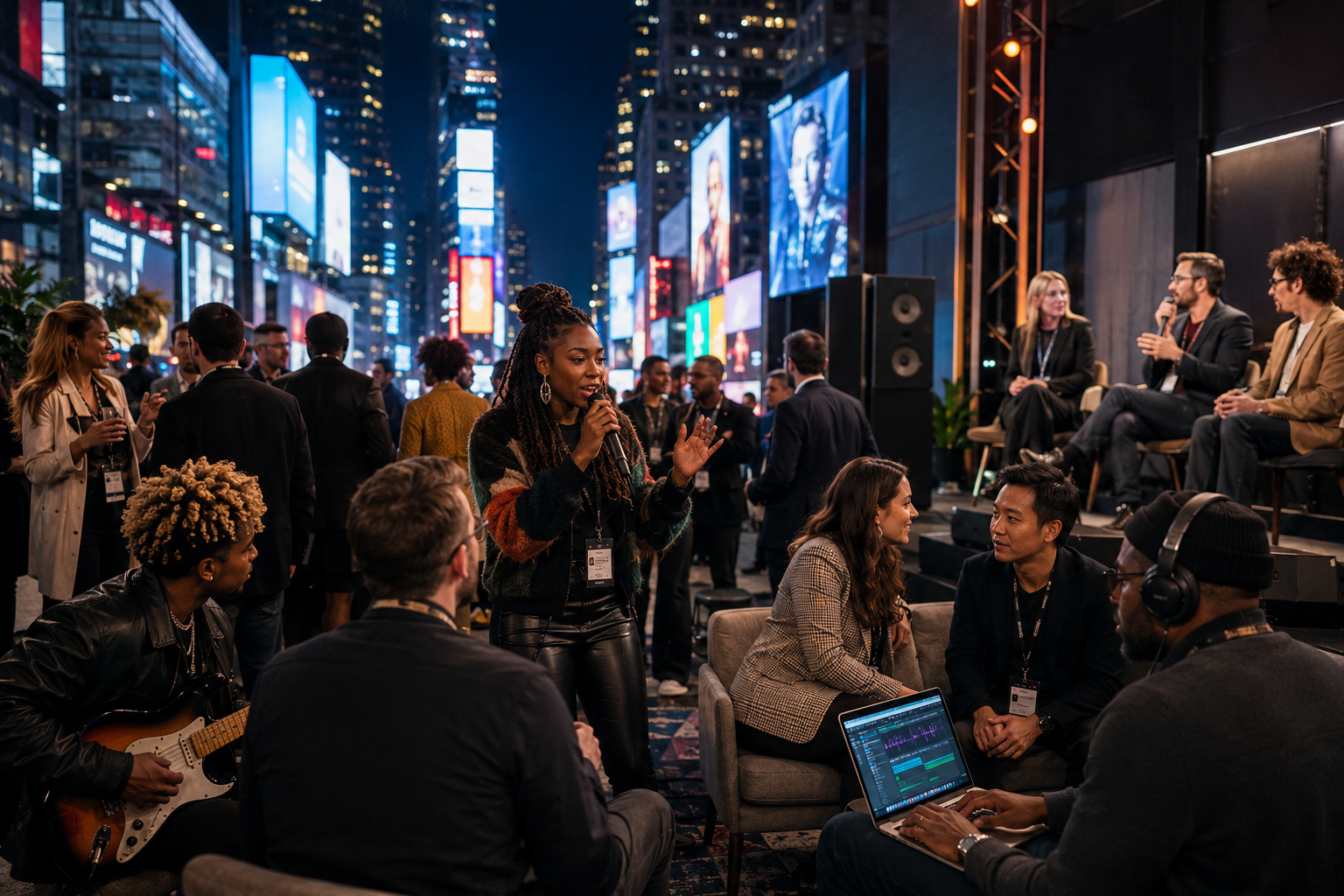
The most important gathering in independent music is happening this weekend. A2IM's Indie Week 2026 — now in its 18th year — opened Monday, June 8 at the InterContinental New York Times Square and runs through Wednesday, June 11, bringing together label owners, artists, distributors, music-tech companies, investors, and copyright policymakers for four days of conversation about the state and future of the independent music industry.
The timing is not incidental. Independent labels and self-released artists now account for 44.15 percent of the U.S. recorded-music industry in the first quarter of 2026, according to Luminate data — a number that continues to climb. The conversations happening at the InterContinental this week will shape the infrastructure, legal frameworks, and business models that determine how that market share translates into sustainable careers for the artists who built it.
Who Is in the Room
The keynote roster this year reflects the breadth of the issues facing independent music. Tom Becci of Concord Label Group is on the docket alongside Shira Perlmutter, the U.S. Register of Copyrights — a pairing that signals how seriously copyright law and AI licensing have become front-of-mind for indie operators. Merlin CEO Charlie Lexton is also featured, as is Steven Victor of Victor Victor Worldwide, the independent label home to Pop Smoke's legacy catalog and one of the more closely watched operations in contemporary independent music.
A2IM CEO Ian Harrison appears in a fireside chat with Luminate CEO Rob Jonas — a conversation likely to focus on the data story behind independent music's market expansion and what it means for how the industry reports and rewards independent streams.
The Sessions That Matter Most for Independent Artists
Beyond the keynotes, Indie Week's programming this year breaks into several tracks directly relevant to working artists. The Spotify for Artists Masterclass is the obvious headline for creators looking to understand how algorithmic playlist placement actually works in 2026. Sessions from Chartmetric, Musixmatch, and SoundExchange address the data and royalty collection infrastructure that most artists underutilize.
The ElevenLabs presence signals the conference's willingness to engage directly with AI — not to celebrate or condemn it, but to understand how independent operators can protect themselves and potentially benefit. A dedicated legal track curated by Perkins Coie includes panels on music litigation, privacy for music services, and the session most artists will want to find a recording of: an ethics panel on AI music licensing that promises to address what independent artists can actually do when their work is ingested without consent.
Indie Week 2026 — Key Facts
- Dates: June 8–11, 2026
- Location: InterContinental New York Times Square
- Presented by: A2IM (American Association of Independent Music)
- Edition: 18th annual
- Indie market share (Q1 2026): 44.15% of U.S. recorded music
- Merlin / Pipeline deal: $200M+ in royalty advances for member companies
- Partners include: Bandcamp, TuneCore, SoundCloud, Billboard, Amazon, Secretly Distribution
The $200M Deal Framing the Whole Conference
The biggest financial news heading into Indie Week is the Merlin deal with Pipeline, a royalty advance platform that will provide more than $200 million in capital to Merlin member companies against their digital royalties. For independent labels and distributors, this is a structural shift: it means access to working capital that historically required either a major-label deal or years of catalog accumulation to unlock.
The implications for individual artists are significant, if indirect. As indie labels gain access to advances at scale, the pressure to sign away catalog rights in exchange for upfront cash — the deal structure that has historically trapped artists on unfavorable terms — decreases. Labels that can fund operations through royalty-backed capital have less incentive to demand ownership in exchange for investment.
The independent sector has reached a point where the financial infrastructure is catching up to the market share. That's new. That's important. — Charlie Lexton, Merlin CEO, ahead of Indie Week 2026
IndieVest and the Investment Angle
A newer addition to the Indie Week program is IndieVest '26, a track specifically designed to connect the financial investment community with the independent music industry. This is a recognition that music — particularly catalog and royalty streams — has become a serious institutional asset class, and that indie labels need fluency in the language investors speak to take advantage of it.
For artists, this matters because it signals where the next wave of independent music funding will come from. It will not be exclusively from label advances. It will increasingly come from equity-style investments, royalty purchase agreements, and hybrid structures that the traditional music industry had no language for five years ago.
YouTube Music's Global Foundry Class
Complementing the conference's themes, YouTube Music has simultaneously announced the first 24 artists of its Foundry Class of 2026 — a program providing financial grants to emerging independent artists in 11 countries, including first-ever participants from Poland and Morocco. The program represents YouTube's most direct investment in independent artist development to date, and its global scope reflects where streaming growth is actually happening.
Whether you are in New York this week or watching from elsewhere, the message from Indie Week 2026 is consistent: independent music is no longer operating in the margins of the industry. It is building the center. The financial infrastructure, legal frameworks, and data tools to support that position are arriving — slowly, imperfectly, but arriving. The artists who understand that shift earliest will be best positioned to benefit from it.