By Loud Drip Staff
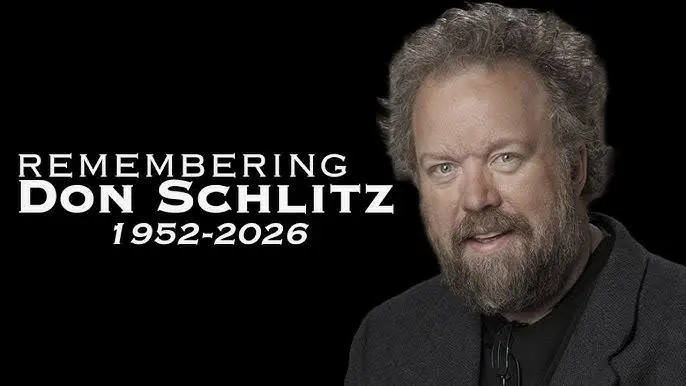
Don Schlitz, the songwriter behind “The Gambler,” died Thursday at 73. His catalog, honors, and reach across country music make his death more than a loss of one writer. It is a reminder that songs still outlast branding, hype, and industry churn.
What we know / What to watch:
AP reported on April 17, 2026 that Don Schlitz died Thursday at a Nashville hospital at age 73. The larger question his death raises is whether today’s music business still gives songwriting itself the same respect it gives celebrity and momentum.
Don Schlitz died Thursday at a Nashville hospital at 73, according to The Associated Press. That fact belongs in the news. What belongs in opinion is the harder truth beneath it: popular music keeps pretending songs are delivery systems for stars, when careers like Schlitz’s prove the opposite. The song is still the thing that lasts.
Schlitz’s résumé is not the résumé of a background craftsman who happened to get lucky once. The Songwriters Hall of Fame says his first recorded song, “The Gambler,” won the Grammy for Best Country Song in 1978 and the Country Music Association’s Song of the Year honor in 1979. It also credits him with songs that shaped the careers of Kenny Rogers, Randy Travis, The Judds, Mary Chapin Carpenter, Keith Whitley, Alison Krauss, Tanya Tucker, and others. That is not a niche footprint. That is structural influence.
The reason Schlitz matters is not just that he wrote hits. A lot of writers write hits. His significance is that he wrote songs that held their shape after trends changed, after radio moved on, and after the industry found newer faces to sell. The Songwriters Hall of Fame’s remembrance published today called “The Gambler,” “On the Other Hand,” “Forever and Ever, Amen,” “He Thinks He’ll Keep Her,” “The Greatest,” and “When You Say Nothing At All” country standards. That word matters. A standard is not just successful. It is durable.
That durability is what the modern music business too often undervalues. Streaming rewards speed, visibility, and repetition. Social platforms reward snippets, memeability, and personality. Labels and managers understandably chase attention because attention is measurable. But measurable is not the same as meaningful. Schlitz’s career is a clean reminder that the deepest value in music still comes from songs with enough emotional clarity and narrative precision to survive changes in technology and marketing. That is interpretation, but it is grounded in the plain record of what he wrote and how long those songs have remained culturally active.
There is also something useful in the scale of his achievement. The Songwriters Hall of Fame says Schlitz was inducted there in 2012, while the Nashville Songwriters Foundation lists him as a 1993 Nashville Songwriters Hall of Fame inductee and records his death as April 17, 2026. Other Hall of Fame materials credit him with more than 50 Top 10 songs, 24 No. 1 hits, four consecutive ASCAP Country Songwriter of the Year honors from 1988 to 1991, and later induction into the Country Music Hall of Fame in 2017. Careers like that do not happen because an artist’s team found the right rollout window. They happen because the writing was good enough to travel.
That is why his death should hit beyond country music. Schlitz’s catalog argues against one of the laziest modern ideas in entertainment: that the public no longer cares who wrote the song. The public may not always know the name first, but it knows the difference between disposable and lasting. People return to songs that say something cleanly, carry a character vividly, or land an emotion without wasting motion. “The Gambler” did not become iconic because it had a rollout strategy. It became iconic because it had narrative force. “Forever and Ever, Amen” did not endure because of format engineering. It endured because it translated devotion into language people wanted to keep. That conclusion is opinion, but it is anchored in the continued recognition those songs have received from the institutions built to track songwriting excellence.
For Loud Drip, the takeaway is about what the industry rewards now versus what it will still be talking about decades from now. The machine can manufacture familiarity. It still cannot fake permanence. Schlitz wrote songs that moved from records to radio to memory to inheritance. Those are different layers of success. Plenty of artists get one. Very few songwriters get all four.
None of this requires nostalgia for some cleaner or purer past. Songwriting is not dying, and there are still brilliant writers working now. The issue is emphasis. When the business treats songwriting as secondary to virality, it trains itself to mistake short-term traction for long-term value. Schlitz’s death lands as a rebuttal to that mindset. His career says the industry’s flashiest metrics are often the weakest way to judge what will matter later. That is an opinionated conclusion, but it follows from a body of work that earned multiple Grammys, multiple major songwriting honors, and enduring status across generations of artists and listeners.
Don Schlitz did not just leave behind a catalog. He left behind evidence. Songs still decide what survives. The stars matter, the rollout matters, and the branding matters, but those things fade fast when the writing underneath them is thin. Schlitz’s songs were not thin. That is why his death is not just a country-music headline from April 17, 2026. It is a reminder that the people who write the songs still shape the part of culture that actually stays.