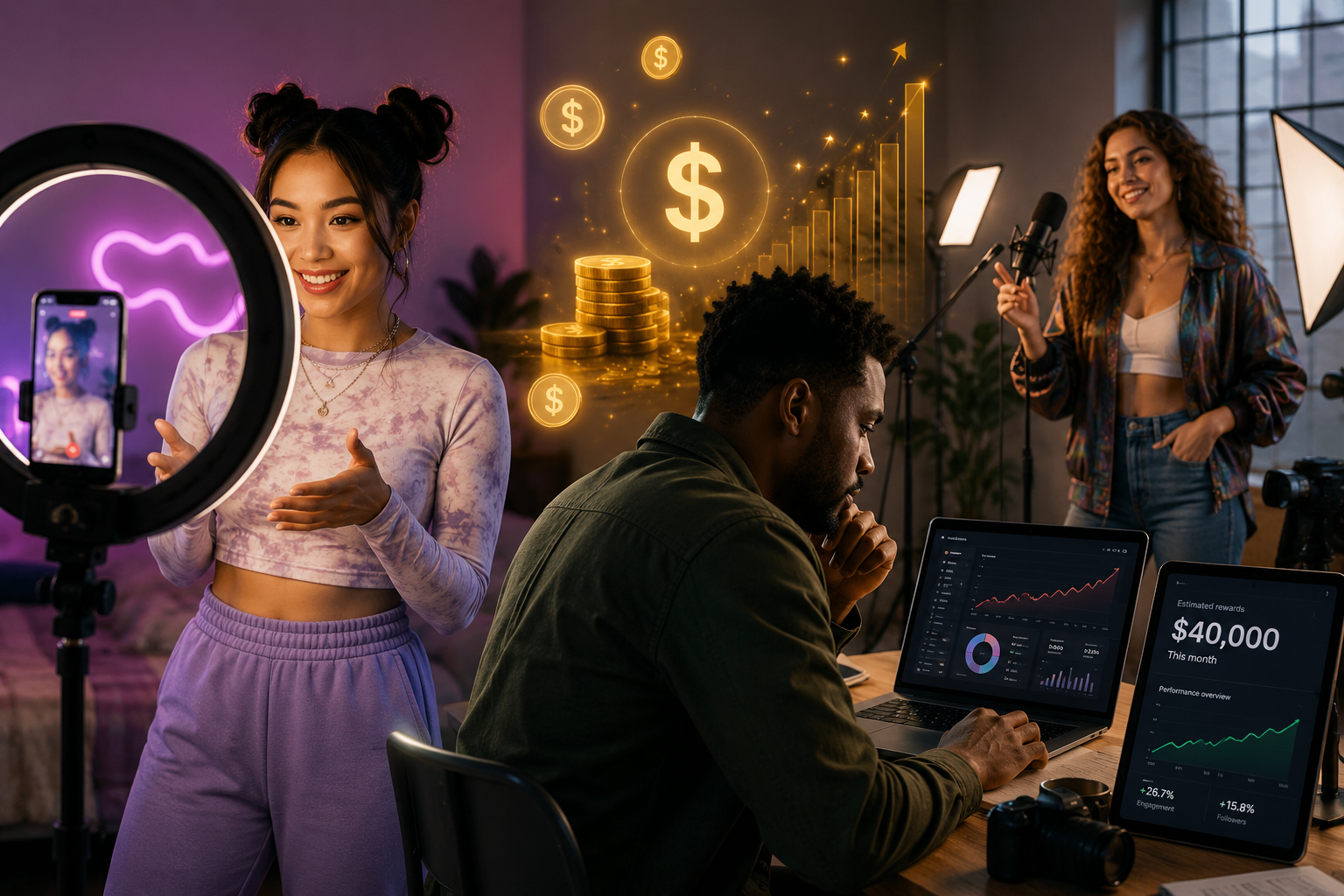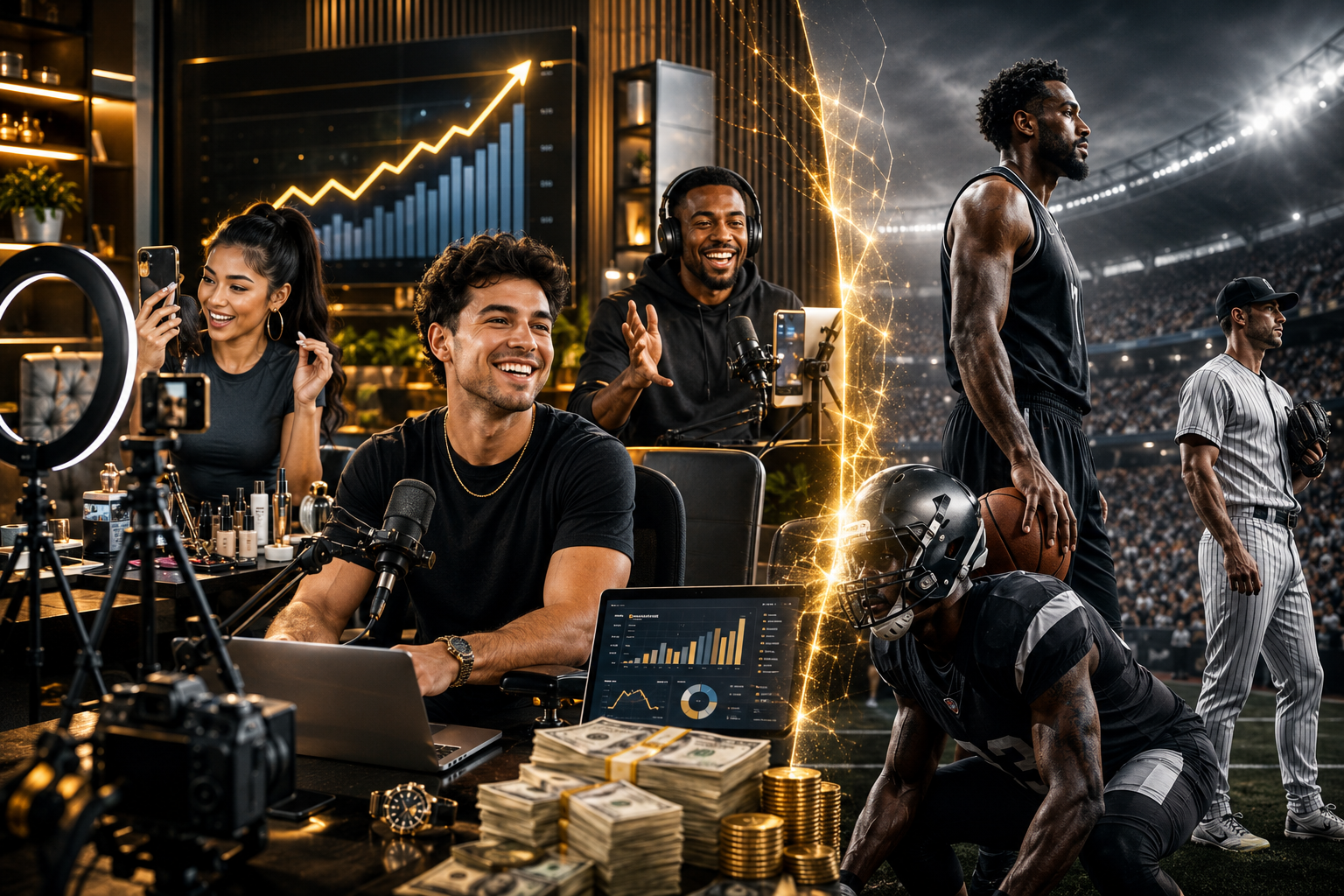
The creator economy's top earners are now generating annual incomes that exceed what all but the highest-paid professional athletes make in a given season, according to Forbes' 2026 Creator Rich List, released in May. MrBeast — the 27-year-old YouTuber born Jimmy Donaldson in Greenville, N.C. — led the list with an estimated $110 million in annual earnings, a figure that outpaces the season salary of more than 95 percent of active NFL players. The gap between creator income and professional sports income, long treated as a punchline, has effectively closed at the top of both ladders.
- MrBeast (Jimmy Donaldson): Est. $110M annually — YouTube, Beast Burger, Feastables, philanthropy platform
- Rhett & Link (Mythical Entertainment): Est. $40M annually across content, merchandise, and licensing
- Charli D'Amelio: Est. $28M — TikTok, brand deals, clothing line, Hulu docuseries
- Creator VC funding (2025): $2.4 billion raised — more than double the 2023 figure, per Crunchbase
- Gen Z aspiration: "Content creator" now ranks above "professional athlete," "doctor," and "lawyer" as a primary career goal among 13–24-year-olds
The Numbers Behind the Shift
The Forbes 2026 Creator Rich List numbers are notable not just for their scale but for their composition. MrBeast's $110 million is not primarily from YouTube ad revenue — it draws from Beast Burger restaurant licensing, Feastables chocolate brand retail sales, his philanthropy platform's revenue-sharing model, and multiple brand partnerships. Rhett & Link's Mythical Entertainment functions as a vertically integrated media company with a podcast network, merchandise operation, and licensing arm built on top of their Good Mythical Morning YouTube franchise. Charli D'Amelio's $28 million flows from TikTok, American Eagle and Invisalign brand deals, her D'Amelio clothing line, and Hulu's docuseries on the family.
These are not one-dimensional personalities monetizing fame — they are diversified business operators. That distinction is what makes the wealth durable and what makes the comparison to professional athletes apt rather than aspirational. For more on individual creator milestones driving this trend, read our coverage of MrBeast's $50M philanthropy platform launch.
Why Creators Have a Structural Advantage
The economic advantage creators hold over athletes comes down to ownership. A professional athlete's labor generates wealth primarily for team owners, league structures, and corporate sponsors — with the athlete receiving a negotiated share of that value. A creator's video, once posted, belongs to the creator indefinitely. The platform takes a revenue cut, but the intellectual property and the audience relationship remain with the creator, compounding in perpetuity.
A video posted in 2019 can still generate ad revenue in 2026. A brand built on a creator's identity continues to pay dividends regardless of posting frequency. And unlike a torn ACL or a contract dispute, a creator's core asset — the trust their audience extends to them — cannot be voided by a third party. That permanence is structurally distinct from how athletic earning works at every level below the ultra-elite.
"Creators are the new sports franchises. They've got the audience, they've got the IP, and they've got the loyalty. That's a business, not a personality."— Venture capital partner, creator economy fund
Venture Capital Has Noticed
The VC community, once skeptical of creator businesses as personality-dependent and therefore fragile, has materially changed its position. Creator-founded companies raised over $2.4 billion in venture funding in 2025, per Crunchbase data — more than double the 2023 figure. The recipients range from influencer beauty brands like Rhode Skin, which crossed a $1 billion valuation this week, to creator-led media companies, SaaS tools built for the creator ecosystem, and content studios operating as full production houses.
The underlying logic is straightforward: if you own the audience, you own the leverage. Creators have demonstrated they can hold audiences at scale, across demographics, with loyalty that traditional media spends enormous resources trying to replicate. Capital is simply following the proof.
What It Signals for the Next Generation
The most enduring implication of creator wealth is what it communicates to the generation behind it. Gen Z and younger millennials — the first to grow up with influencer culture as a normalized career path — are watching the numbers and responding rationally. Aspiration surveys consistently show that "content creator" now ranks above "professional athlete," "doctor," and "lawyer" as a primary career goal among teenagers. That is not wishful thinking; it is a market signal. The infrastructure supporting creator careers — platform monetization tools, accessible production technology, brand deal marketplaces — has never been more robust. Follow LoudDrip's Influencers coverage as the economics of creator careers continue to evolve through 2026.