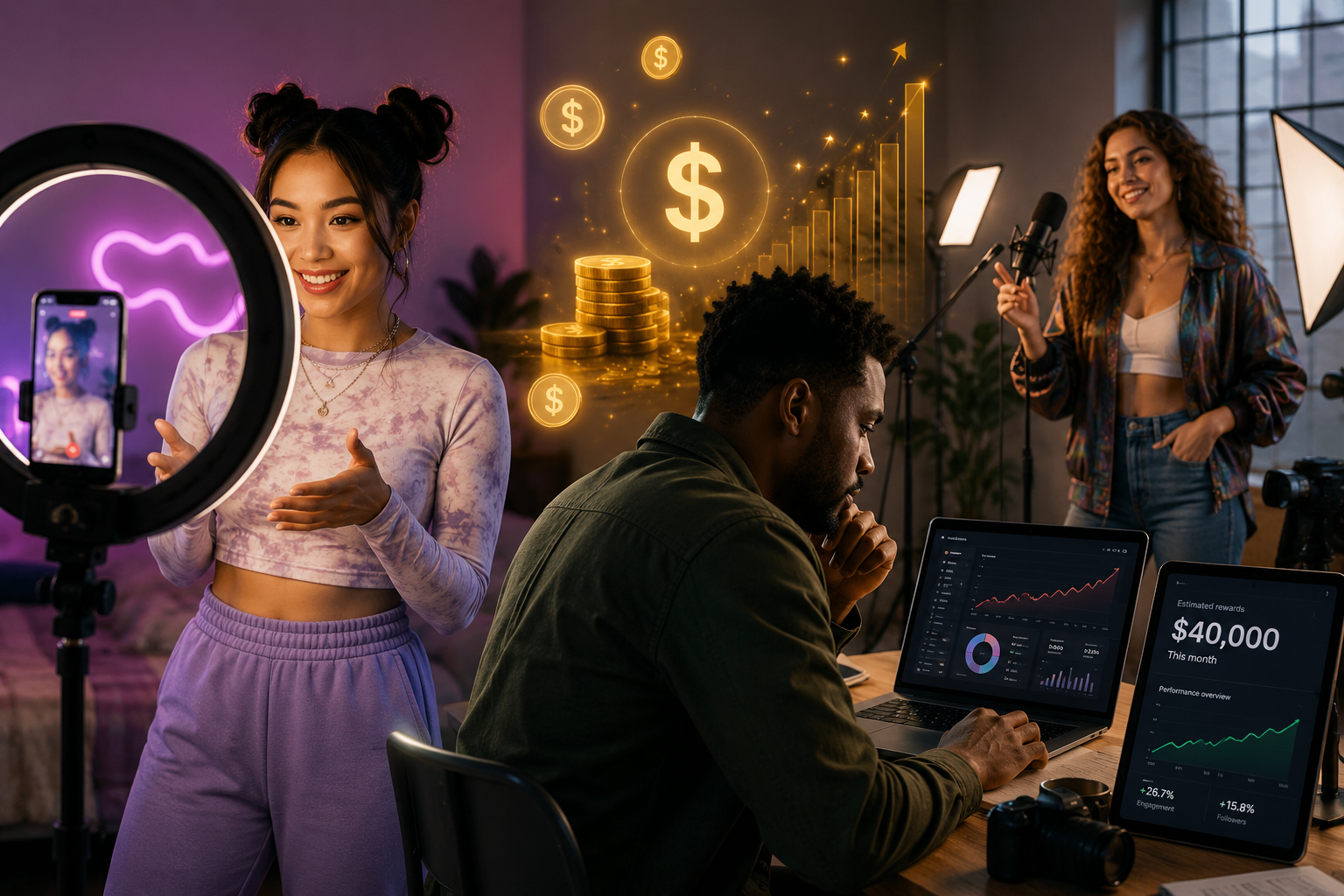
TikTok's Creator Rewards Program — the platform's revamped monetization system launched in late 2023 to replace the widely criticized Creator Fund — is delivering monthly payouts of $5,000 to over $40,000 for top-qualifying creators in 2026, according to earnings reports shared publicly by multiple creators and corroborated by industry analysts. The original Creator Fund paid fractions of a cent per thousand views; the new program's top tier represents a fundamental structural shift in how the platform compensates content. But the eligibility requirements separating the well-paid from the overlooked have effectively split TikTok's creator ecosystem in two.
- Entry requirement: Minimum 10,000 followers and 100,000 views in the last 30 days
- Video minimum: Videos under 60 seconds are excluded from top-tier payouts
- Originality Score: Must exceed 90 for top payout tier; trend-based, duet, and stitch content is penalized
- Top monthly earnings: $5,000–$40,000+ from platform revenue sharing alone
- Biggest winners: Long-form educational, narrative, and original entertainment creators
- Biggest losers: Trend-based, duet-heavy, and short-form–focused creators seeing near-zero payouts
Who Qualifies — and Who Doesn't
The Creator Rewards Program pays out based on a composite score weighing video originality, watch time completion, engagement depth (comments and shares carry more weight than likes), and minimum video length. Videos under 60 seconds are categorically excluded from the top payout tiers — a deliberate move by TikTok to push creators toward longer-form content and compete more directly with YouTube.
To reach top-tier compensation, creators must maintain an "Originality Score" above 90 — meaning content flagged as trending-sound dependent, duet-heavy, or stitch-reliant is significantly devalued. That single requirement has eliminated a substantial portion of TikTok's mid-tier creator ecosystem from meaningful earnings.
"I went from $200 a month with the old fund to $8,000 last month with the new program. But I also completely changed how I make content to get there. It wasn't painless."— TikTok creator, 1.2M followers
The Winners: Long-Form and Original Creators
The creators benefiting most from the restructured program are those making original, longer-form content — educational explainers, narrative storytelling, mini-documentaries, and original scripted comedy series. These formats generate higher watch-time completion, stronger engagement depth, and higher originality scores. Several TikTok educators in science, history, and personal finance reported that their monthly platform income doubled or tripled between Q1 2025 and Q1 2026 without a material increase in follower count.
Entertainment and lifestyle creators who pivoted from quick-cut trending content to structured, narrative-driven videos have seen comparable gains. The transition requires a fundamentally different production approach — and a willingness to sacrifice short-term virality for sustained platform income. For those who have made the shift, the financial math has been compelling enough to justify the creative overhaul. This trend also connects to a broader creator economy shift detailed in our breakdown of how top influencers are building wealth that rivals professional athletes in 2026.
The Losers: Trend-Based Creators Squeezed Out
For creators whose content is built on trending sounds, viral formats, duets, and stitches — a massive and previously celebrated segment of TikTok's culture — the new program has been a revenue setback. The originality requirements explicitly penalize content that borrows from existing trends, which is, of course, how TikTok built its identity in the first place. Many micro-creators who saw modest but meaningful earnings under the old fund have seen payouts fall to near zero under the new system.
The result is a quiet but measurable exodus of mid-tier creators to YouTube Shorts and Instagram Reels, both of which have been courting displaced TikTok talent with competitive monetization incentives and favorable algorithmic treatment for crossover accounts. TikTok's U.S. growth has not stalled, but its creator middle class is contracting. Follow LoudDrip's Influencers section as the platform's monetization structure continues to evolve through the second half of 2026.