By Loud Drip Staff
Taylor Swift trademark lawsuit has cut into one of pop’s strongest recent victory laps. Las Vegas performer Maren Wade sued over Swift’s use of “The Life of a Showgirl,” alleging trademark infringement just days after Swift swept the 2026 iHeartRadio Music Awards with seven wins tied to the same album.
What we know / What to watch:
Maren Wade says Swift’s album title is confusingly similar to her long-running “Confessions of a Showgirl” brand and is seeking damages plus an injunction. The next key question is whether the dispute stays a contained trademark case or starts affecting the branding and commercial life of Swift’s current era.
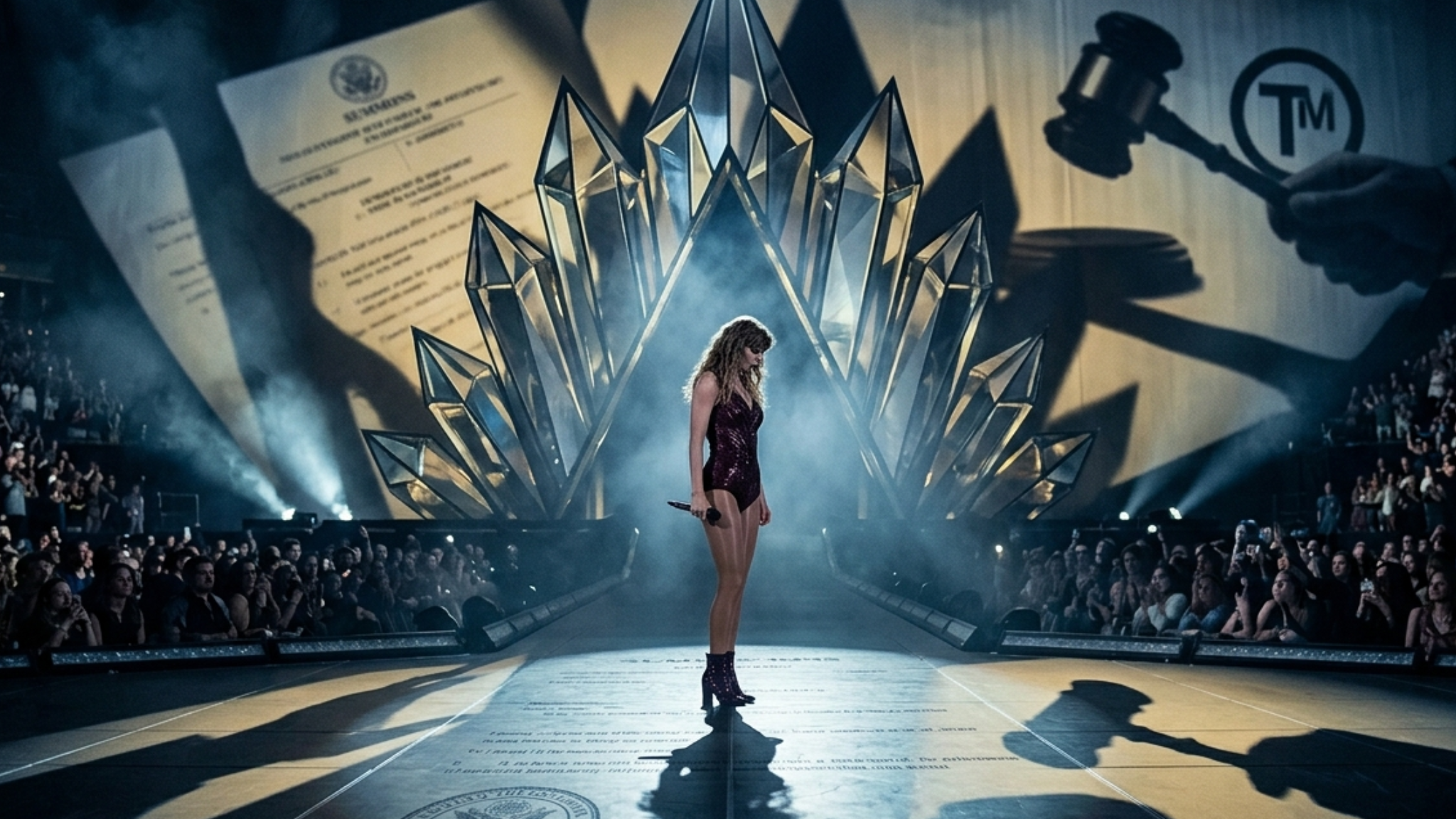
Taylor Swift lawsuit is now hanging over one of the cleanest winning streaks in pop. Taylor Swift was sued in California federal court by Las Vegas performer Maren Wade, who alleges that Swift’s album title “The Life of a Showgirl” infringes on Wade’s existing “Confessions of a Showgirl” brand. Reuters reported that Wade says she has used that branding since 2014 and has held a trademark since 2015, with the brand extending across live entertainment and related projects. She is seeking both money damages and an injunction to stop further use of the disputed phrase.
What makes the case worth real attention is not that it suddenly puts Swift in career danger. It does not. The stronger story is that a legal fight has arrived right as her current era looks commercially bulletproof. Reuters reported on March 27 that Swift dominated the 2026 iHeartRadio Music Awards, winning seven trophies including Artist of the Year and Best Pop Album for The Life of a Showgirl. That means the same title now under legal challenge is also the label attached to one of the most successful current runs in mainstream pop.
The lawsuit’s core claim is straightforward. According to Reuters’ report on the trademark suit. Wade argues that Swift’s title is confusingly similar to her own established showgirl brand and could mislead consumers while damaging the value of her work. Reuters also reported that the U.S. Patent and Trademark Office had already rejected Swift’s attempt to trademark “Life of a Showgirl” because of possible confusion with Wade’s mark. That detail gives the dispute more weight than a generic celebrity lawsuit headline, because it suggests the issue had already triggered concern inside the trademark process itself.
That is where the culture angle gets sharper. Pop stars no longer just release albums; they launch eras with names, visual identities, merchandise, tour aesthetics and online mythologies. Once a title becomes central to that machinery, it stops being a decorative phrase and starts functioning like a commercial asset. The Life of a Showgirl is not merely an album name floating in a vacuum. It is part of Swift’s current public identity, tied to award speeches, fashion, fan language and the broader framing of this chapter in her career. When a title at that level gets challenged, the story moves beyond entertainment gossip and into the business infrastructure beneath pop stardom.
That is also why this case spread so quickly. Heavy framed it as “bad career news,” which is exactly the kind of wording that makes a legal dispute sound like a collapse. The facts do not support that. Swift is still operating from a position of unusual commercial strength. Reuters said she led the iHeart awards field with seven wins, including major trophies connected to the same album now being challenged in court. The lawsuit complicates the narrative; it does not reverse it.
Still, the complication is real. Wade is not claiming a vague aesthetic overlap. She is making a trademark argument that goes to ownership of the branding frame itself. Courts do not care whether fans think an era “feels” original. They care about prior use, consumer confusion and whether one party’s commercial activity could reasonably interfere with another’s protected mark. That legal lens is what makes the dispute culturally interesting. Fans hear “Showgirl” and think mood, performance, glamour and emotion. A court hears “Showgirl” and asks who got there first, what category it covers and who profits from the association.
There is also an industry lesson buried in this. The more pop music becomes era-driven, the more vulnerable stars become to title, trademark and branding fights. In a previous generation, an album title might have mattered mostly to retailers and radio hosts. Now it anchors streaming pages, visual rollouts, partnerships, merch drops, award-show copy and social-media discourse. A fight over the name is a fight over the container holding the whole era together. Wade’s suit does not just question one phrase. It implicitly questions whether a superstar can absorb an existing niche brand into a much larger machine without consequence.
The timing makes the contrast even cleaner. Just days before the filing, Reuters said Swift used her iHeart speeches to reflect on growth, privacy and creative joy, while publicly tying some of the album’s emotional energy to the happiness in her personal life. In other words, the Showgirl era was being sold as bright, free and fully in control. The lawsuit cuts a thin but visible line through that control by reminding everyone that a pop empire still rests on legal and commercial scaffolding. Even the most polished mythology can get interrupted by paperwork.
It would still be sloppy to overstate the immediate danger. A filed lawsuit is not a ruling, and Reuters noted that Swift and Universal Music Group had not yet publicly commented. Trademark cases can settle quietly, narrow in scope or end without dramatic consequences. So the smart reading here is not that Swift’s era is collapsing. It is that her current era has acquired a real legal vulnerability at the level of branding, and that vulnerability is newsworthy precisely because the era has otherwise looked so airtight.
The strongest takeaway is simple. The Taylor Swift lawsuit matters because it exposes the tension between cultural dominance and legal ownership. Swift still has the awards, the audience and the momentum. What she now has in addition is a title dispute that turns one of her biggest current assets into a contested one. That does not diminish the size of the era. It makes the machinery behind the era more visible.