By Carter Hayes
The Usher Chris Brown tour was announced with a cinematic teaser, but key details are still missing. That gap is part of why the story is landing so hard: two of R&B’s biggest stars are promising stadium scale, fan nostalgia, and a major culture conversation before ticketing even begins.
What we know: The Usher Chris Brown tour was announced on April 10 through a joint teaser video on Instagram. Multiple outlets reported that the run is branded “R&B: Raymond & Brown,” a reference to Usher’s surname, and that no dates or cities were disclosed in the initial reveal.
What to watch: The biggest open questions are practical and reputational at the same time: when dates will be released, whether the stadium plan holds across markets, how ticket demand develops, and how much Brown’s ongoing legal baggage shapes coverage of the tour itself.
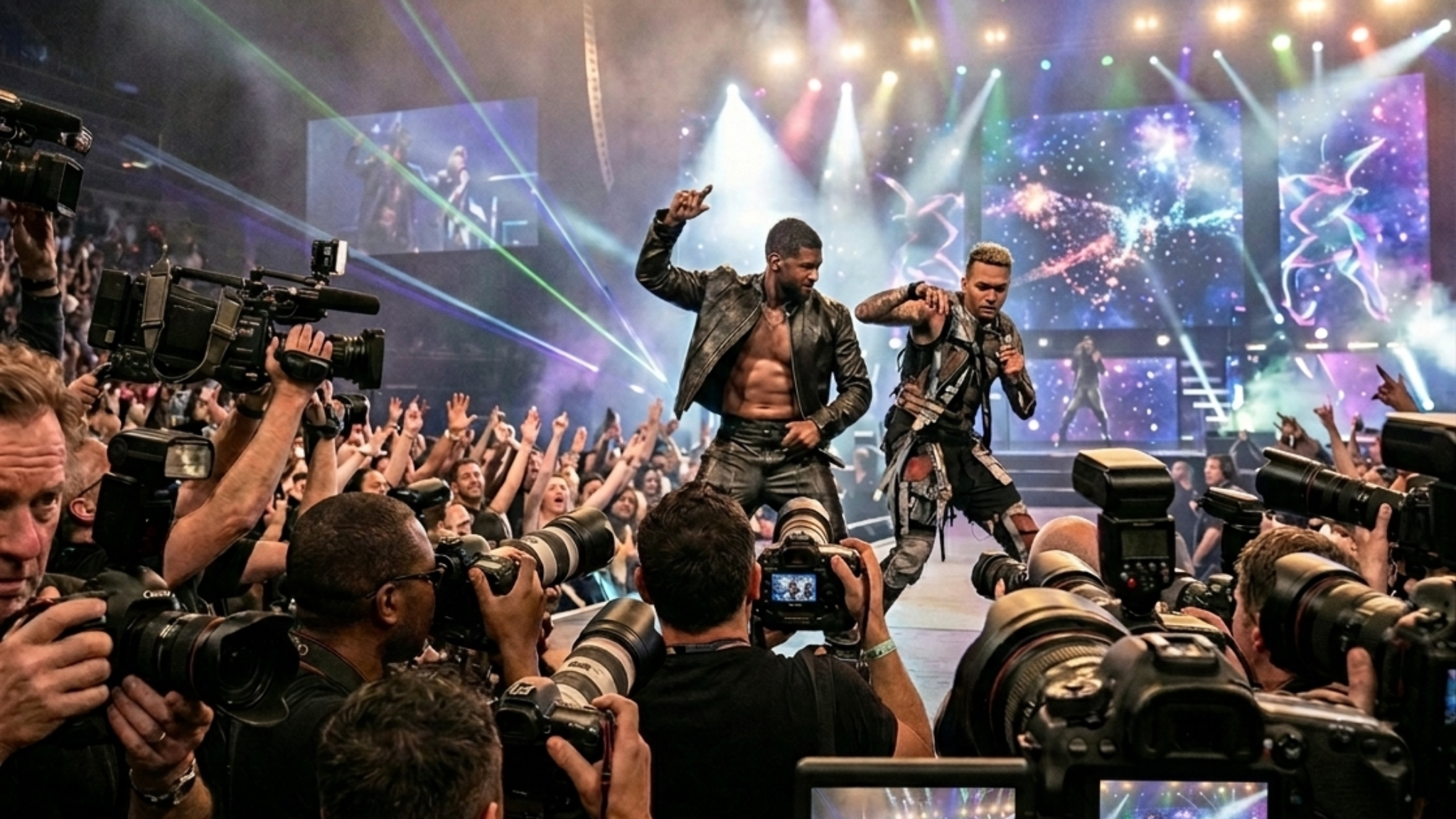
The Usher Chris Brown tour is officially on the board, at least in teaser form. On April 10, Usher and Chris Brown posted a cinematic promo announcing “R&B: Raymond & Brown,” a joint tour framed as a stadium event. The reveal gave fans the concept and the branding, but stopped short of confirming dates, cities, or on-sale information. That missing detail has not slowed attention. If anything, it has amplified it, because the announcement sells scale first and logistics second.
That matters because this is not just another co-headlining run. Usher and Brown occupy overlapping but distinct eras of mainstream R&B stardom. Usher is one of the defining crossover performers of the late 1990s and 2000s, with a recent legacy boost from his 2024 Super Bowl halftime show and the release cycle around Coming Home. Brown remains one of the genre’s most commercially durable hitmakers of the last two decades, with a new album, Brown, reportedly due May 8. Put together, the pairing is being pitched less like a normal package tour and more like an event built around catalog power, spectacle, and generational reach.
The teaser itself is part of why the story is moving so fast. The Los Angeles Times described the video as showing the two artists riding through a city on motorcycles, arriving at a stadium, and walking onto a stage before a crowd. In the clip, Usher says, “It’s time,” and Brown answers, “Hell yeah.” Even without a routing announcement, that presentation does real work. It does not sell intimacy. It sells size. It tells fans to expect a blockbuster.
There is also an obvious cultural hook here: the “R&B” branding is clean, memorable, and built for social circulation. It doubles as the genre label and as shorthand for Raymond & Brown, which gives the tour a strong identity before the business details have even landed. That kind of naming matters in 2026 because tours now compete not only for ticket sales, but for meme value, repost value, and headline value. “R&B” is the kind of title that can travel fast across entertainment coverage, fan pages, music blogs, and short-form video without much explanation.
The announcement also lands at a moment when nostalgia and live-performance credibility still carry major weight in Black music. Fans are not just buying songs anymore; they are buying eras, memories, and the feeling of seeing catalog records turned into giant shared moments. Usher brings a polished live reputation that has only grown stronger in recent years. Brown brings a deep stack of hits and a fan base that has remained commercially engaged through albums, features, and touring. Together, they create a bill that invites comparison, celebration, and debate all at once. That is a strong formula for culture coverage because it produces more than excitement. It produces conversation.
There is another layer, though, and it cannot be ignored if the story is going to be reported seriously. Brown remains a polarizing figure whose career has continued alongside repeated legal and public-image problems. Reuters reported in January that Brown was due to face trial in October 2026 in the U.K. over charges tied to an alleged 2023 nightclub assault; AP likewise reported that the trial is scheduled for October 26, 2026. Brown has denied the charges. That does not erase his commercial draw, but it does mean any major tour attached to his name arrives with reputational context baked in. A large-scale joint run with Usher is therefore not just a music story. It is also a test of how much star power can dominate the narrative over controversy.
That tension is part of why this announcement matters beyond fan service. Usher’s image has recently been tied to legacy, polish, and broad public appeal. Brown’s image is more contested, even as his numbers and visibility remain strong. Bringing the two together on one stadium concept turns the tour into a culture barometer. It will show whether the market treats this as a pure celebration of R&B catalog and performance, or whether coverage, sponsorships, and audience response stay split along reputational lines. That is not abstract media talk. It affects ticketing, press tone, brand alignment, and how the tour is remembered if it becomes one of the year’s biggest live events.
There is also a more straightforward industry reason people are paying attention now: stadium tours are expensive bets. Calling this an all-stadium run signals real confidence in demand. But until dates, venues, and prices are published, the announcement is still operating as a promise. Loud Drip readers should look at it that way for now. The teaser confirms intent and scale. It does not yet confirm execution market by market. That distinction matters, especially in a touring environment where routing, pricing, and secondary-market chatter can change public sentiment fast.
Still, the upside is obvious. If the dates hold and the rollout lands cleanly, the Usher Chris Brown tour could become one of the year’s biggest R&B live stories simply because it combines a strong concept, huge catalogs, and instant debate. In entertainment, that is usually the recipe that turns an announcement into a real event.
More Like This: