By Loud Drip Staff
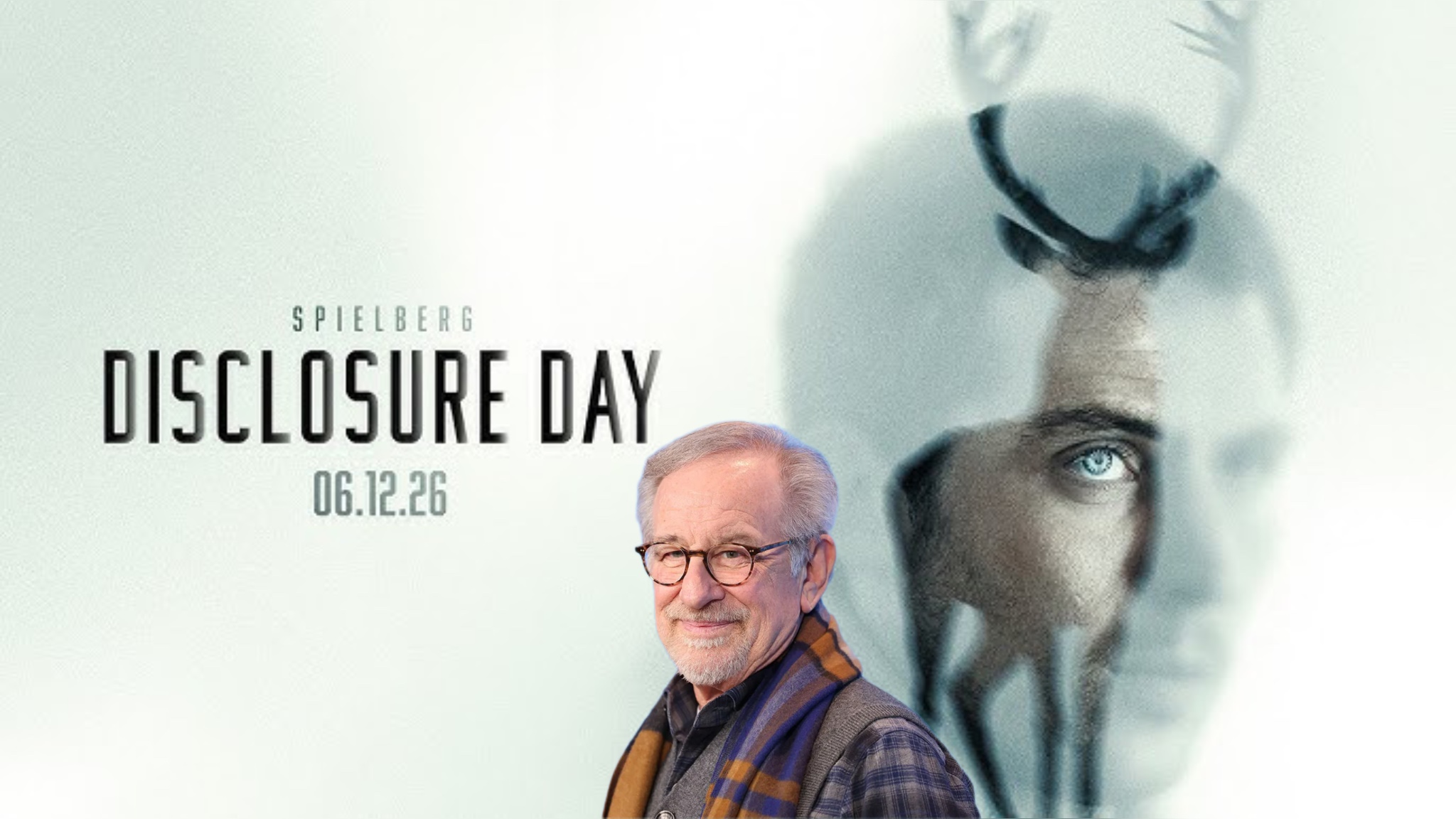
Steven Spielberg used CinemaCon this week to preview his June 12 alien film “Disclosure Day,” saying it was inspired in part by a 2017 New York Times report on UFO sightings, while also arguing for original storytelling and longer exclusive theatrical windows. That combination matters more than the teaser itself.
What we know / What to watch:
Universal presented “Disclosure Day” at CinemaCon on April 16, 2026, with Spielberg describing it as “more truth than fiction,” while AP reported he also backed longer theatrical windows and original storytelling. The question now is whether Hollywood will treat that message as principle or just premium-brand marketing.
Spielberg new movie news from CinemaCon landed as more than routine hype. Reuters reported on April 16 that Steven Spielberg unveiled his upcoming alien film “Disclosure Day,” said it was inspired by real-life UFO reporting, and framed it as “more truth than fiction.” AP reported the same presentation also included a defense of original storytelling and longer exclusive theatrical windows. Put together, that is a sharper statement about the state of Hollywood than the usual convention applause.
The cleanest read is also the most uncomfortable one for the industry: one of the biggest filmmakers alive is still having to make the case that originality and theatrical patience matter. That should not be a bold position. It should be baseline common sense. Instead, it now reads like a corrective. AP reported that Universal pledged to move to a 45-day theatrical window by 2027, and Spielberg publicly backed the idea. That matters because release windows are not just business mechanics. They shape whether a movie feels like an event or just another piece of content rushing toward the couch.
There is a reason this argument carries weight coming from Spielberg. Reuters reported that “Disclosure Day” stars Emily Blunt, Josh O’Connor, Colman Domingo, and Colin Firth and is set for release on June 12. AP reported that Spielberg received the MPA America250 Award during the Universal presentation. He is not making this case from the margins or from nostalgia without leverage. He is making it from inside the highest tier of the business, which makes the message harder to dismiss as romantic hand-wringing.
What Spielberg appears to understand is that theatrical culture does not survive on franchise familiarity alone. It survives when audiences believe there is still something new worth leaving home for. Reuters reported that he described his 1977 film “Close Encounters of the Third Kind” as speculation, while presenting “Disclosure Day” as drawing from reported UFO encounters, including a 2017 New York Times article on U.S. military sightings. That does not guarantee the new film will be great. It does signal a willingness to build a large-scale movie around fresh intrigue instead of inherited brand certainty. In the current market, that choice matters.
That is the real point. Hollywood keeps talking like it has a marketing problem when it often has a conviction problem. Studios say audiences need to be lured back to theaters, but they also keep training audiences to expect short windows, familiar IP, and a fast path to streaming. AP reported that Spielberg explicitly tied original films to the health of the film business. He is right. If the industry wants theaters to feel necessary, it has to protect the conditions that make a theatrical release feel distinct. Longer windows help do that. So does betting on movies that are not just sequels wearing better lighting.
There is a harder business argument underneath this too. A shorter window can look efficient on a spreadsheet because it accelerates platform value. But efficiency is not the same as cultural strength. When every film is rushed through the same compressed cycle, the marketplace flattens. Theaters lose exclusivity, audiences lose urgency, and the movie itself loses some of its social scale. AP’s report framed moviegoing as still being in a delicate recovery period even as attendance has improved from last year. In that environment, shrinking the theatrical experience further is not strategy. It is erosion.
That is why Spielberg’s timing matters. CinemaCon has been full of studio promises, star presentations, and salesmanship, but this was one of the clearer statements about what the business is actually missing. Not everything needs to be original to justify a ticket. But the industry absolutely needs original films in the mix if it wants the audience relationship to stay alive and not just become transactional. Loud Drip should not have to pretend that every giant presentation says something meaningful. This one did, because it connected product to principle without hiding behind generic optimism.
None of this means originality alone will save theaters. AP reported that the domestic box office remains about 20% below pre-pandemic levels, while competition from streaming is still intense. Those pressures are real. But that is exactly why the wrong response is to get more timid. If the market is fragile, then the business should be even more careful about stripping movies of what makes them feel special in the first place.
The strongest takeaway from “Disclosure Day” is not whether aliens sell. It is that one of Hollywood’s most proven filmmakers is still arguing that movies need room to breathe and stories need room to surprise. That should not sound radical. In 2026, it does. And that says more about the industry than it does about Spielberg.
More Movie News: